0%
Loading ...




Physical activity and sports can contribute significantly to the health, education, coexistence, social cohesion, and quality of life of the populationHowever, for these benefits to truly reach the entire citizenry, public sports policies must incorporate a social, inclusive, and inequality-reducing perspective.
Designing a sports policy with social impact involves going beyond programming activities or managing facilities. It requires identifying the economic, social, territorial, cultural, functional, or gender barriers that may hinder access to physical and sports activities, as well as defining priorities, resources, and action mechanisms adapted to the reality of each territory.
This type of policy also requires Coordination with other municipal areas, such as health, education, equality, youth, social services, or urban planning. Likewise, it is necessary to have the participation of the different agents involvedpublic administrations, sports and social entities, professionals, educational centers, operating companies when applicable, and especially the people who are the beneficiaries of the actions.
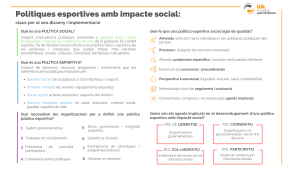
In this computer-generated graphic We gather some of the keys to move forward toward Quality sports policiesalignment with the territory’s strategic frameworks, resource allocation, the incorporation of a cross-cutting perspective on equality and inclusion, good governance, communication, monitoring, and evaluation. Elements that should enable that that sports be consolidated as an effective tool for expanding opportunities and generating social impact.